No word on fate of Hammerl
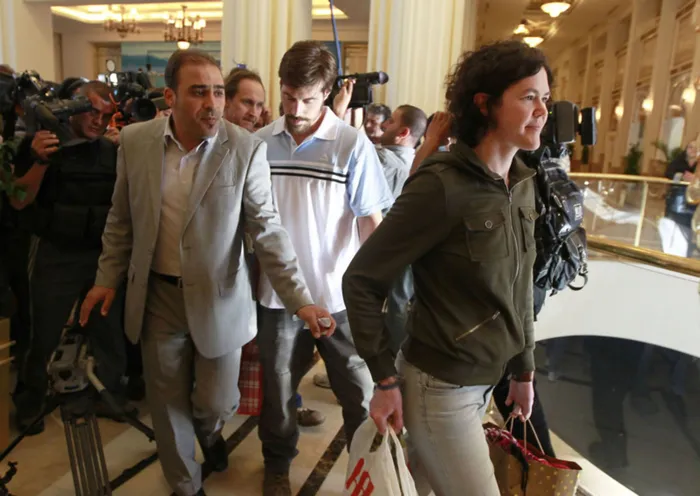
American reporters Clare Gillis (right) and James Foley (centre) arrive at the Rixos hotel after being released by the Libyan government in Tripoli. American reporters Clare Gillis (right) and James Foley (centre) arrive at the Rixos hotel after being released by the Libyan government in Tripoli.
Tripoli - Libya freed four foreign reporters on Wednesday who had been charged with entering the country illegally and said it was hard for its army to distinguish between journalists and people working with rebels.
American reporters Clare Gillis and James Foley, Spanish photographer Manu Brabo and British journalist Nigel Chandler were brought in front of other reporters at a news conference.
The four, who appeared tired but otherwise healthy, only spoke to confirm their names before moving to a side room in the Tripoli hotel. They were each given a one-year suspended jail sentence and fined 200 dinars.
“This is war time,” government spokesperson Mussa Ibrahim said. “We know that there are foreign, special, European army experts fighting with the rebels. So the army did not know immediately that these people are journalists, that they are harmless.”
“If anyone was mistreated then we extend our apologies,” he added.
Ibrahim said the four could either stay in Tripoli and keep reporting or be escorted to the Tunisian border.
Forces loyal to Muammar Gaddafi detained Brabo, Foley and Gillis on April 5 near the eastern oil town of Brega. Gillis has worked for The Atlantic magazine and Foley for the GlobalPost website.
Spain's foreign ministry said earlier on Wednesday it expected Brabo would go to the border. It was not immediately clear who Chandler was working for or when he went missing.
Ibrahim said Libya had detained 60 journalists since the start of the conflict. He added that he had no information on another journalist, South African Anton Hammerli, who has been reported missing.
Last month two photojournalists - Oscar-nominated filmmaker Tim Hetherington and Getty photographer Chris Hondros - were killed after coming under fire in the besieged Libyan town of Misrata. - Reuters